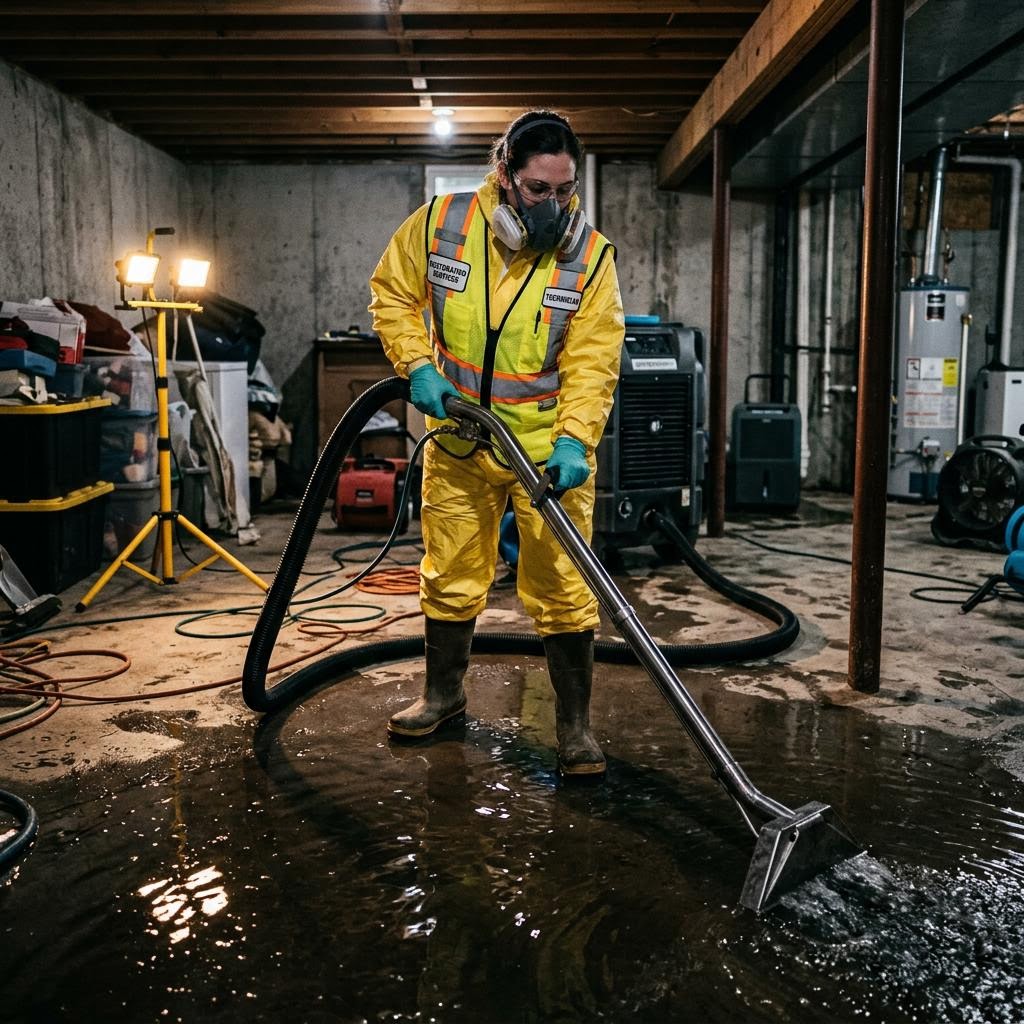
Professional Restoration Services
From emergency water extraction to biohazard sanitation, we provide the expertise, equipment, and urgency required to recover your property.
Water Damage Restoration
Emergency extraction, advanced structural drying, and total moisture mitigation.
Flood Cleanup
Rapid response to natural disasters and major pipe failures affecting your property.
Mold Remediation
Safe, contained removal of harmful mold growth and permanent moisture control.
Fire & Smoke Damage
Soot removal, odor elimination, and structural restoration after fire trauma.
Sewage Cleanup
Biohazard-grade sanitation and safe removal of category 3 black water.
Structural Drying
Targeted psychrometric drying of framing, drywall, and subflooring.
Commercial Restoration
Large-loss mitigation designed to minimize downtime for your business.
Choose the Right Restoration Service for the Condition
Property damage rarely stays limited to the first thing you see. A supply-line leak may leave moisture under flooring, a flood may bring debris and contamination, and a fire can leave both smoke residue and water from suppression efforts. The appropriate response depends on the source, the materials involved, and whether the area can be occupied safely. Our service pages explain the purpose of each restoration discipline so you can identify the next practical step.
Warning Signs That Deserve Attention
Standing water, a sewage odor, soot on surfaces, visible mold-like growth, staining, swollen trim, buckling flooring, or a persistent musty smell are all reasons to investigate. Conditions can extend behind walls, under cabinets, or into adjacent rooms. If water is near electrical equipment, a ceiling is sagging, or wastewater has entered the building, avoid the area and prioritize safety over cleanup.
What a Professional Restoration Plan Usually Includes
- Assessment: Review the source, affected materials, safety concerns, and moisture or contamination pathways.
- Protection: Isolate work areas when needed, protect unaffected belongings, and manage hazards before active cleanup.
- Mitigation: Extract water, remove debris or unsuitable materials, clean appropriate surfaces, and address residues.
- Moisture control: Use measured drying conditions and monitoring to address water that remains beyond the visible surface.
- Documentation: Keep photos, readings, and a work record to support informed decisions and your own records.
Safe Steps While You Arrange Service
If it is safe, stop the active water source and move dry belongings away from the affected area. Take photographs and note when the issue was discovered. Keep children and pets out of wet or contaminated rooms. Do not use household vacuums on standing water, run electrical equipment in wet spaces, dry-scrape suspected mold, or try to clean sewage yourself. For fire losses, wait for official clearance before entering and avoid wiping soot-covered surfaces.
Why Measured Moisture and Contamination Control Matters
A room can look dry while moisture remains in assemblies, and a cleaned surface may not reflect contamination inside porous materials. IICRC-aligned restoration principles provide a disciplined framework for assessment, containment, cleaning, drying, and documentation. They help match the response to the actual condition rather than relying on a one-size-fits-all approach. For urgent service guidance, call (726) 200-6317. You can also contact your insurer directly to understand the documentation it may request.
Start with Clear, Useful Details
Describe whether water, smoke, or wastewater is present. Mention electrical concerns. This identifies service and safety priorities. Keep photos and notes.
Water Damage Doesn't Wait. Neither Do We.
Our IICRC-aligned restoration teams are standing by 24/7 in Schertz, TX. Call now for immediate emergency dispatch.
Available Right Now in Schertz & Surrounding Counties