Clear Information Supports Safer Decisions
Every property loss has different materials, moisture paths, and safety considerations. A professional assessment documents observable conditions, identifies immediate priorities, and explains the proposed scope before work proceeds. Share the source, timeline, affected rooms, and prior cleanup steps when known; these details help guide appropriate containment, cleaning, and drying decisions.
Science-Driven Moisture Removal
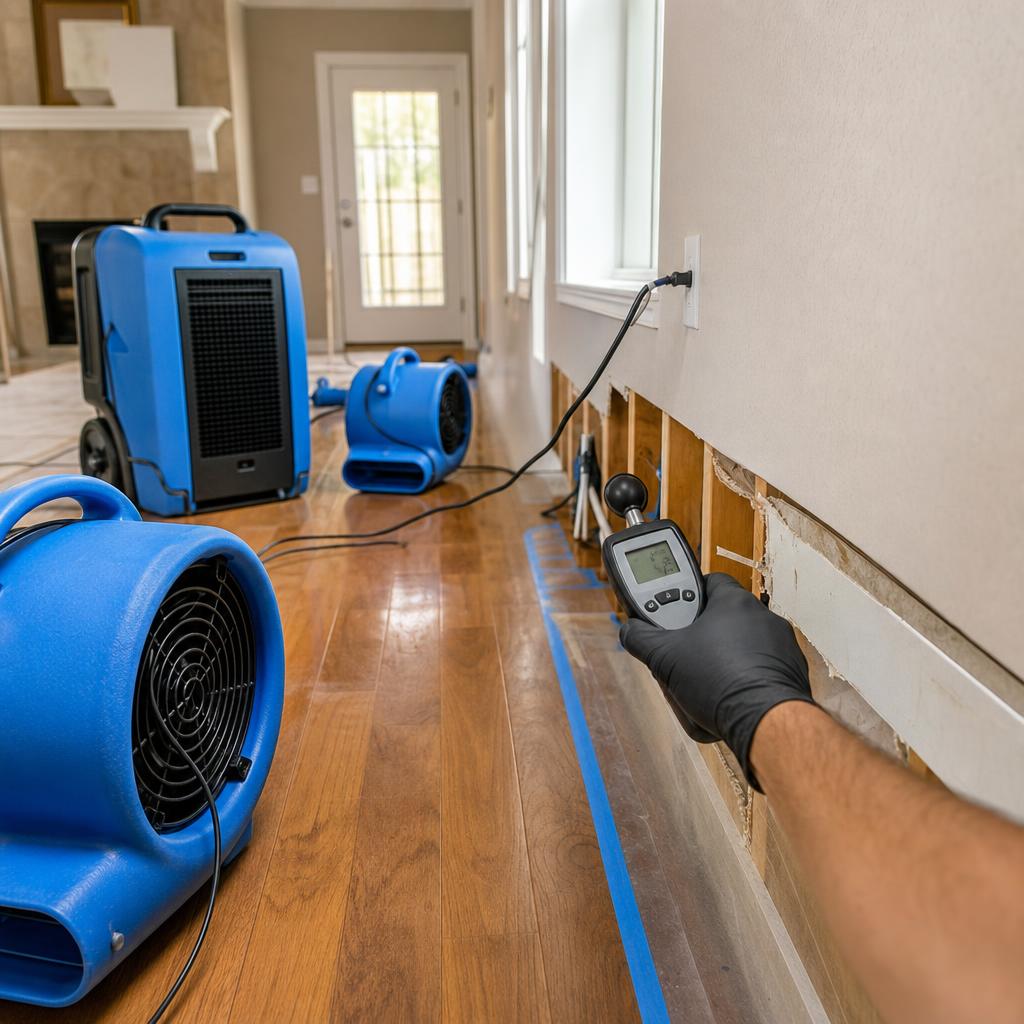
Extraction removes visible water, but materials can retain moisture beneath floors, inside walls, and within framing. Structural drying manages that remaining moisture by creating conditions that encourage evaporation and then remove water vapor from the air. The objective is measured drying, not simply making a room feel warm or dry.
Applied Psychrometrics
Psychrometrics describes the relationship among temperature, humidity, airflow, and water vapor. Readings help determine where equipment should be placed and whether conditions are changing as expected. This is useful when water has reached concealed materials that cannot be judged by touch alone.
Our Drying Technology
- Moisture inspection: Meters and visual review help define affected materials and establish a drying target.
- Air movement and dehumidification: Equipment is selected and positioned to support evaporation and vapor removal.
- Focused drying: Cavities, cabinetry, or floor assemblies may need targeted access when moisture is concealed.
- Monitoring: Conditions and material readings are reviewed so the plan can be adjusted and documented.
Warning Signs of Hidden Moisture
Watch for cupped flooring, swollen baseboards, loose flooring, staining, a musty odor, or rooms that remain humid after a leak. A surface can feel dry while moisture remains behind it. These signs are not a diagnosis, but they are useful reasons to have the assembly evaluated before repairs cover the area.
Safe Steps for Property Owners
Stop the source if it can be done safely, keep people away from wet electrical areas, and move belongings off damp flooring. Do not drill into a wall, remove finishes, or run fans around water of unknown origin without considering contamination and utilities. Keep photographs and a timeline of the event. If drying equipment is installed, leave it operating as directed and avoid blocking air paths.
Information That Supports a Drying Plan
Tell the assessment team when the water event began, whether water was extracted already, and which rooms or materials have changed since then. Photos of the initial condition and notes about a leak source can be useful. This history, together with current moisture readings, supports decisions about access, equipment placement, and monitoring.
Professional moisture control uses measurements to support decisions about drying, cleaning, and material removal. IICRC-aligned drying principles help address moisture that could otherwise remain concealed and affect repairs later. Call (726) 200-6317 to discuss structural drying needs.