Clear Information Supports Safer Decisions
Every property loss has different materials, moisture paths, and safety considerations. A professional assessment documents observable conditions, identifies immediate priorities, and explains the proposed scope before work proceeds. Share the source, timeline, affected rooms, and prior cleanup steps when known; these details help guide appropriate containment, cleaning, and drying decisions.
Immediate Mitigation Prevents Permanent Damage
Water moves beyond the visible puddle. It can travel beneath flooring, into wall cavities, and along framing, where it may affect finishes and indoor conditions. A prompt, organized response helps limit how long materials remain wet and gives the drying plan a clear starting point.
Warning Signs After a Leak
Staining, peeling paint, swollen trim, a musty odor, soft flooring, or an unexplained rise in humidity can point to moisture that is not fully visible. Check areas below bathrooms, kitchens, laundry connections, and water heaters. If a ceiling bows, water is near electrical equipment, or the source cannot be stopped, keep clear and seek qualified help.
Our Water Mitigation Process
- Assessment and source control: We identify affected materials and discuss whether the source has been stopped.
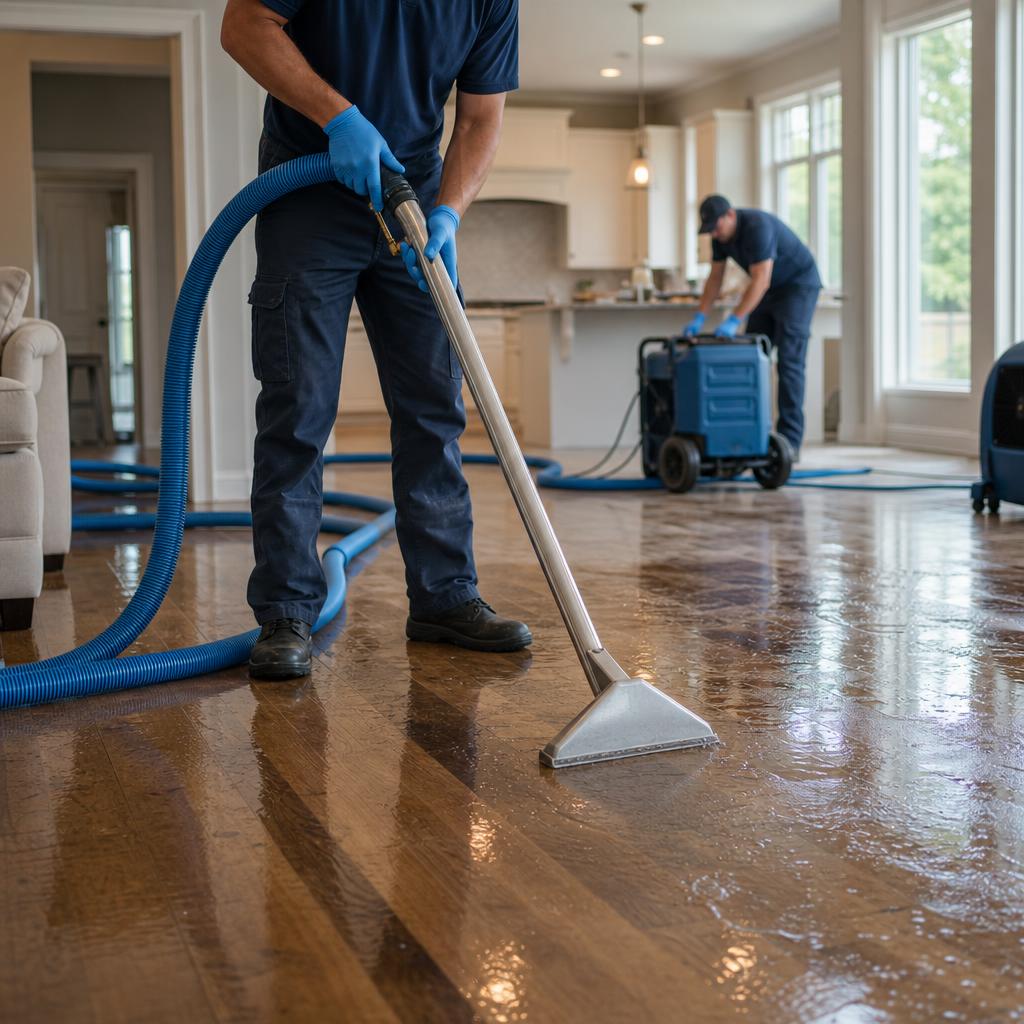
- Extraction and moisture mapping: Pumps, vacuums, meters, and other tools guide removal of standing water and identify wet areas.
- Controlled structural drying: Air movement and dehumidification are placed and adjusted to dry materials rather than simply warming the room.
- Monitoring and documentation: Readings, photographs, and the work scope create a record of conditions and progress.
Protect the Property Safely
If it is safe, turn off the water at the fixture or main valve and move dry valuables away from the affected area. Blot small clean-water spills and place foil or blocks beneath furniture legs. Do not enter standing water near outlets, operate a wet appliance, pull up carpet, or use a household vacuum on water. Avoid directing fans at water of unknown origin; that can spread contamination.
Why Moisture Control Matters
- Plumbing leaks and appliance failures can wet cabinetry, drywall, and subfloors.
- Roof or exterior leaks may affect insulation and concealed framing.
- Seepage can leave moisture beneath finished floors long after the surface looks dry.
Preparing for the Assessment
Clear a safe path to the affected room, if possible, and let the technician know about the water source, when it was discovered, and any areas you have already cleaned. Point out rooms below or next to the loss and any flooring changes you have noticed. This context helps connect visible damage with possible hidden moisture without making assumptions about the scope.
Professional moisture control is based on the water source, the materials involved, and measured conditions. IICRC-aligned practices help separate drying decisions from guesswork, including when a material can be cleaned and dried and when removal should be considered. Keep notes and photos for your records, and contact your insurer directly to understand your policy and claim requirements.