Clear Information Supports Safer Decisions
Every property loss has different materials, moisture paths, and safety considerations. A professional assessment documents observable conditions, identifies immediate priorities, and explains the proposed scope before work proceeds. Share the source, timeline, affected rooms, and prior cleanup steps when known; these details help guide appropriate containment, cleaning, and drying decisions.
Minimizing Downtime for Your Business
A water, fire, mold, or sewage event in a commercial property affects people, inventory, building systems, and normal operations. A useful response starts with safety and a clear understanding of which areas are affected. The mitigation plan should account for building use, occupied spaces, and the need to keep clean areas separated from work areas.
Scalable Response for Large Losses
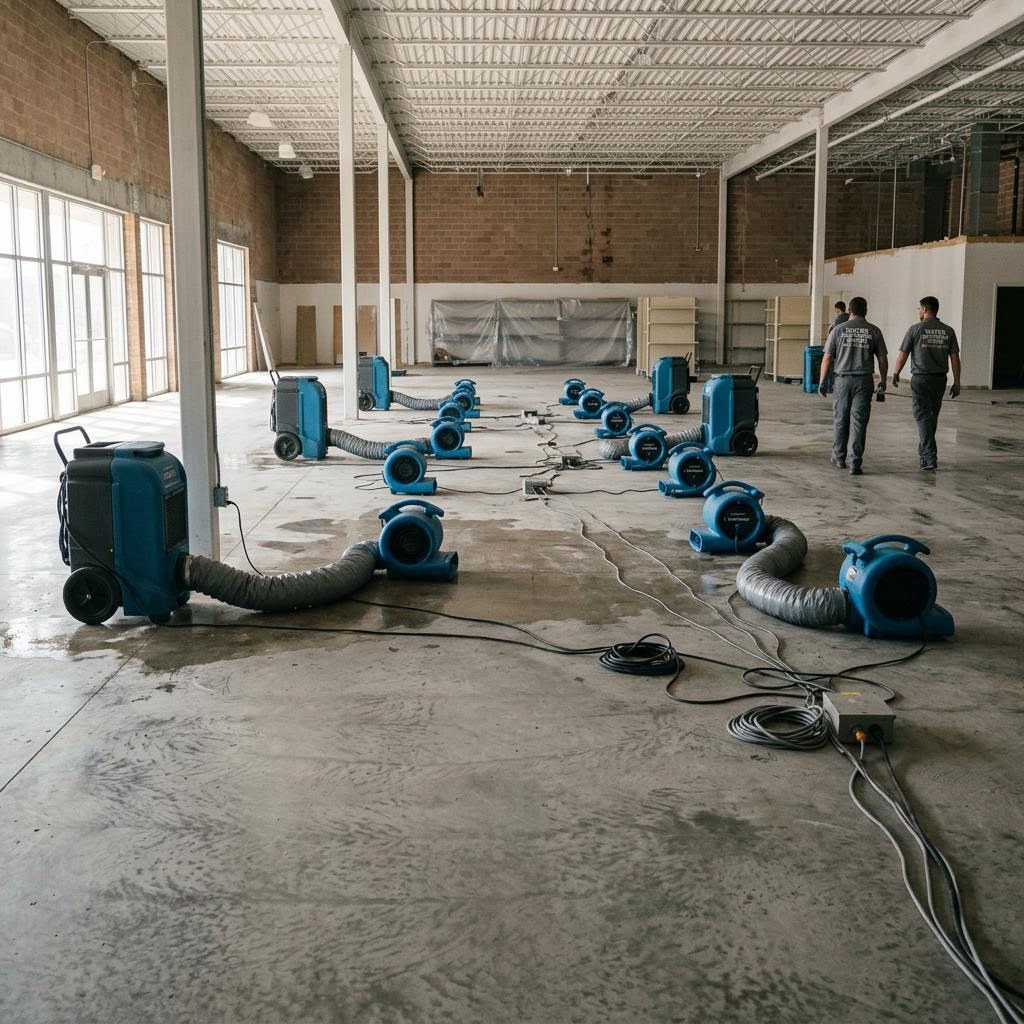
Commercial losses can involve large floor areas, multiple rooms, specialized finishes, and shared building systems. They may also require coordination with property managers, occupants, and other trades. Documented conditions and a staged scope help stakeholders understand the work being performed and the decisions made as conditions change.
Our Commercial Approach
- Safety and scope review: We identify affected spaces, likely pathways, and site-specific access considerations.
- Containment and sequencing: Work areas can be separated from unaffected areas when conditions permit.
- Extraction, cleaning, and drying: Equipment and methods are matched to the loss type and building materials.
- Documentation: Photos, readings, and daily information support communication with property stakeholders.
What Facility Teams Can Do Safely
Protect people first: restrict access to wet, smoky, or contaminated areas and follow any emergency direction from authorities. If safe, stop the water source and move portable records or inventory away from the impact. Photograph conditions, note when the event was discovered, and share building plans or utility information with the response team. Do not use electrical equipment in wet areas, disturb suspect mold, or clean sewage without appropriate controls.
Why Professional Moisture and Contamination Control Matters
Commercial interiors often contain concealed cavities, shared HVAC pathways, and materials with different drying and cleaning needs. A surface-level cleanup can miss water beneath finishes or allow contaminants to move through traffic patterns. IICRC-aligned practices use assessment, containment, measured drying, and documentation to make mitigation decisions more deliberate.
Prepare Key Site Information
Share access procedures, utility information, occupied areas, building contacts, and any known hazards before work begins. A floor plan and timeline of the event can help identify likely migration paths and sequence the response. Clear communication lets property stakeholders make informed choices about access, temporary protection, and coordination with other services.
Contact (726) 200-6317 to discuss the current property condition, safe access, and information needed for the next step.