Clear Information Supports Safer Decisions
Every property loss has different materials, moisture paths, and safety considerations. A professional assessment documents observable conditions, identifies immediate priorities, and explains the proposed scope before work proceeds. Share the source, timeline, affected rooms, and prior cleanup steps when known; these details help guide appropriate containment, cleaning, and drying decisions.
Address Mold and the Moisture Behind It
Mold growth is commonly associated with excess moisture on building materials. A visible spot or musty odor is a reason to look for a leak, condensation, or material that has stayed damp—not simply to cover the surface. Effective remediation considers the affected area, the source of moisture, and how to avoid transferring particles into unaffected spaces.
Warning Signs Worth Investigating
Watch for recurring discoloration, a damp or earthy odor, condensation on windows, peeling finishes, or staining near plumbing and roof lines. Growth may be hidden behind baseboards, under flooring, or inside a wall after a leak. These signs do not identify a specific cause on their own, but they support a careful inspection of moisture conditions.
Why Surface Cleaning Alone Is Not a Plan
Spraying an unknown material or aggressively scrubbing a large area can disturb it and spread particles. Bleach is not appropriate for every surface or situation. Porous materials that are significantly affected may require removal, while some nonporous and semi-porous materials can be cleaned using methods selected for the condition. Correcting the moisture source is essential to the overall plan.
Our Comprehensive Process
- Assessment: We review visible conditions and potential moisture pathways to define the work area.
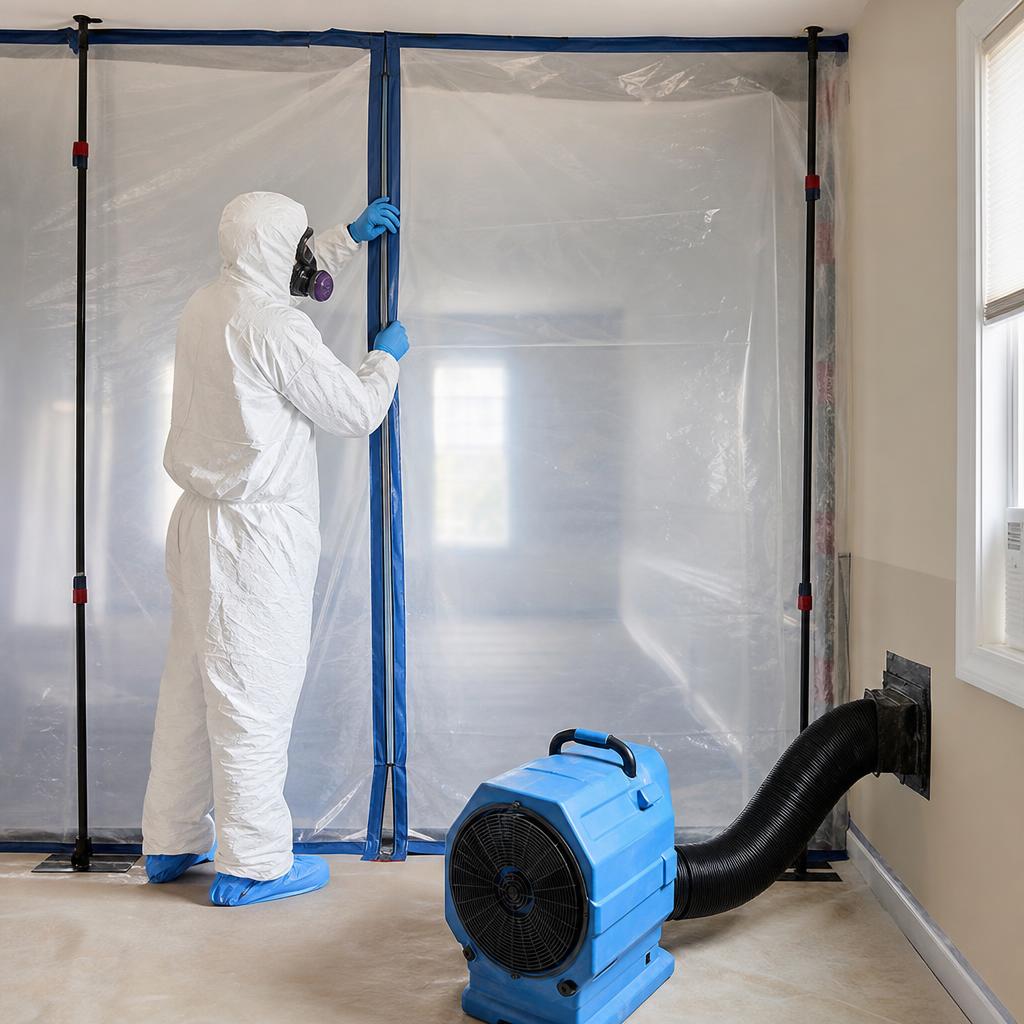
- Containment: Barriers and appropriate air-management methods help keep work separated from occupied or clean areas.
- Removal and cleaning: Affected materials are handled according to their type and condition; retained surfaces are cleaned with suitable methods.
- Drying and verification: Moisture conditions are addressed and documented before the area is closed back in.
Safe Steps for Property Owners
Fix active leaks if you can do so safely, lower indoor humidity where practical, and keep the area undisturbed until it can be assessed. Photograph what you see and avoid dry-scraping, sanding, or using a fan directly on a suspect area. Do not remove a large area of damaged material without considering containment, protective equipment, and disposal. People with health concerns should consult an appropriate healthcare professional.
Preparing for a Remediation Review
Share when the odor or visible condition was first noticed, recent leaks, and any prior repairs or cleaning attempts. Keep access available to nearby plumbing, exterior walls, or the room below if those areas may be related. This history helps locate moisture pathways and prevents a visible patch from becoming the only focus of the work.
Professional contamination and moisture control helps make the scope deliberate rather than cosmetic. Our work follows IICRC-aligned principles for containment, cleaning, and drying. Call (726) 200-6317 to discuss observed moisture or mold conditions.