Clear Information Supports Safer Decisions
Every property loss has different materials, moisture paths, and safety considerations. A professional assessment documents observable conditions, identifies immediate priorities, and explains the proposed scope before work proceeds. Share the source, timeline, affected rooms, and prior cleanup steps when known; these details help guide appropriate containment, cleaning, and drying decisions.
Sewage Backup Requires Contamination Control
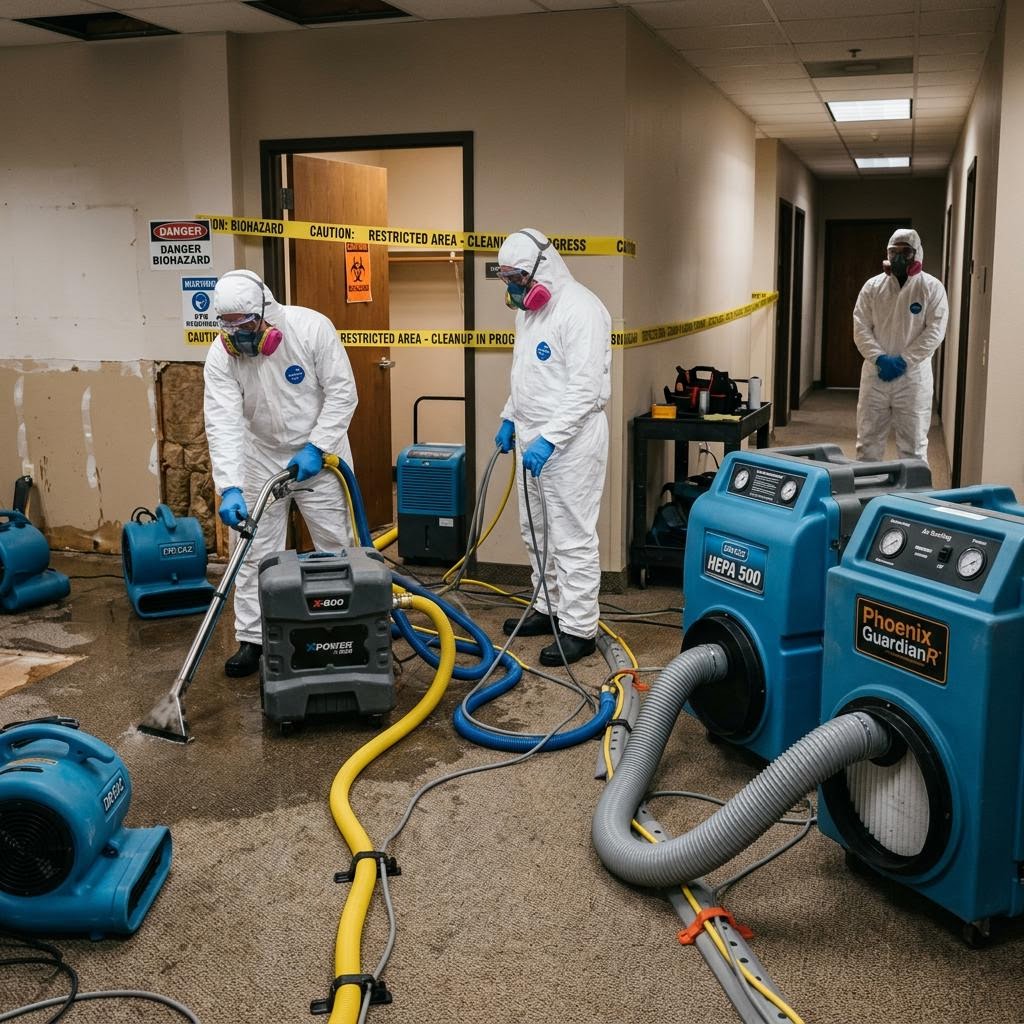
A sewage backup can introduce wastewater and contaminants into occupied areas. This category of water should be handled cautiously because contact, splashes, and affected porous materials may present health and cleanup concerns. The immediate goal is to isolate the area and prevent contamination from moving into clean spaces.
Immediate Containment is Crucial
Carpet, padding, insulation, drywall, and upholstered belongings can absorb contaminated water. Their condition and extent of impact must be evaluated before a cleaning decision is made. Merely drying a surface does not address contamination inside absorbent materials or beneath flooring.
Our Biohazard Cleanup Process
- Isolation and assessment: We establish the affected work area and review materials, pathways, and safety considerations.
- Controlled extraction: Wastewater and solids are removed using appropriate equipment and protective measures.
- Material handling: Affected porous materials are evaluated for removal and proper disposal.
- Cleaning, disinfection, and drying: Remaining surfaces are cleaned and the structure is managed for residual moisture.
What to Do Before Help Arrives
Keep people and pets away from the affected room, avoid flushing toilets or running fixtures that could add water, and do not use a household vacuum or fan. Avoid contact with wastewater and do not attempt to wash contaminated textiles with regular laundry. If safe, close an interior door to limit traffic and photograph the visible extent from outside the area. Wash hands thoroughly after any accidental contact.
Why the Full Scope Matters
Odor, staining, damp baseboards, and water that appears in an adjacent room can indicate that the impact extends beyond the original overflow. Professional contamination control combines containment, material evaluation, cleaning, and moisture measurement. IICRC-aligned principles help guide the work according to the source and conditions rather than treating every spill alike.
Information That Helps the Assessment
Note which fixtures were used before the backup, where wastewater first appeared, and whether it reached adjacent rooms or stored items. Photograph the condition from a safe distance and retain records of plumbing service. This information helps distinguish the impacted pathway and supports a scope that addresses both visible residue and concealed materials.
Document the event for your records and ask your insurer what information it needs. For sewage cleanup assistance, call (726) 200-6317.